In Eastern medicine, the body and mind are deeply connected. Emotions are not just feelings—they are experienced and stored within the body. When emotions are balanced, energy flows smoothly. When they are not, tension and discomfort can appear.
Here are five key emotional connections within the body:
1. Anger — Liver
The liver is associated with anger and frustration.
When anger is suppressed or builds up over time, it can create tension in the body, especially around the neck, shoulders, and head.
When balanced, this energy supports:
- Healthy expression
- Clear decision-making
- Emotional flow
2. Joy — Heart
The heart is linked to joy and emotional connection.
Balanced joy brings warmth, love, and a sense of peace.
However, excessive stimulation or emotional overwhelm can lead to restlessness or anxiety.
3. Worry — Spleen
The spleen is connected to worry and overthinking.
When the mind is constantly busy, it can weaken energy and lead to fatigue or digestive discomfort.
Balance brings:
- Clarity
- Focus
- Grounded thinking
4. Grief — Lungs
The lungs are associated with sadness and grief.
Unprocessed grief can feel like heaviness in the chest or shallow breathing.
When released, it allows:
- Deep breathing
- Letting go
- Emotional renewal
5. Fear — Kidneys
The kidneys are linked to fear and deep survival energy.
Excess fear can drain energy and create a sense of insecurity or exhaustion.
Balanced energy supports:
- Inner strength
- Stability
- Calmness
The Five Elements theory in Eastern medicine is not just about organs—it describes how energy moves and transforms within the body and in nature.
Everything Is Connected in Cycles
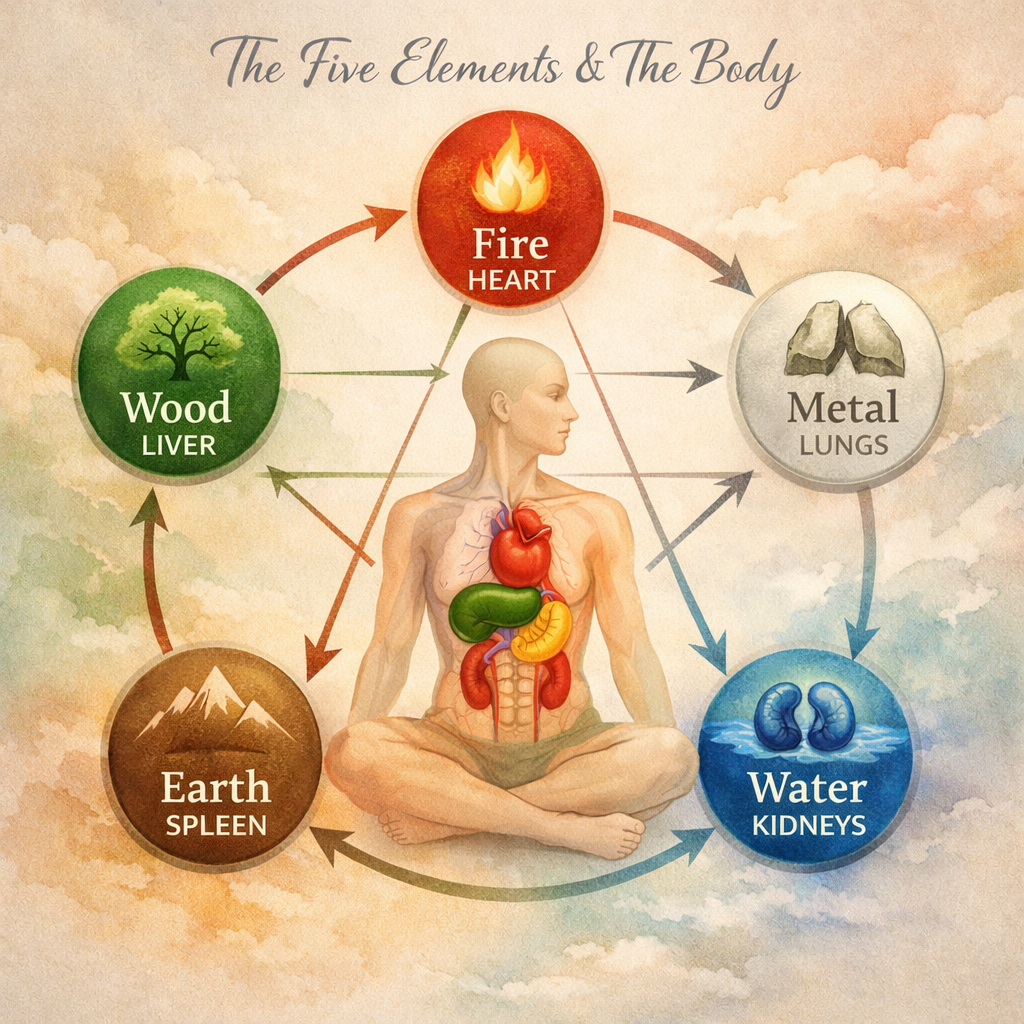
The Five Elements follow a continuous cycle known as the generating cycle:
- Wood → Fire → Earth → Metal → Water → Wood
Each element supports the next. For example:
- Wood feeds Fire
- Fire creates Earth (ash)
- Earth produces Metal
- Metal collects Water
- Water nourishes Wood
This shows how balance is maintained through support and flow.
Balance Is More Important Than Strength
In Eastern medicine, health is not about having “strong” energy in one area—it’s about balance between all elements.
- Too much Fire → restlessness, overheating
- Too much Water → fatigue, low energy
Harmony between elements is the goal.
Emotions Are Part of the System
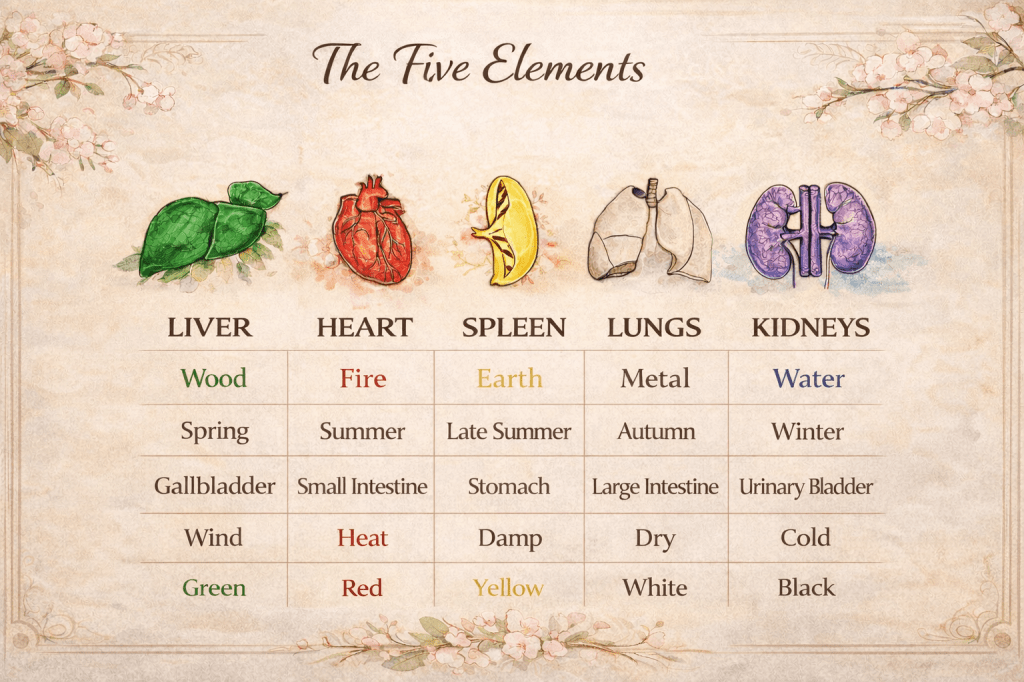
Each element is connected not only to organs but also to emotions:
- Wood → Anger
- Fire → Joy
- Earth → Worry
- Metal → Grief
- Water → Fear
This is why emotional stress can affect physical health.
Nature and the Body Mirror Each Other
The Five Elements are also linked to seasons:
- Spring (Wood) → growth
- Summer (Fire) → expansion
- Late Summer (Earth) → nourishment
- Autumn (Metal) → release
- Winter (Water) → rest
Your body naturally follows these cycles throughout the year.
Small Imbalances Can Grow Over Time
If one element is out of balance for too long, it can affect others in the cycle.
For example:
- Long-term stress (Wood imbalance) can affect digestion (Earth)
This is why early care—like massage, rest, and stress management—is important.
The Five Elements remind us that the body is not separate parts, but a connected, flowing system. Supporting one area can positively influence the whole body.
 Eastern Harmony Massage/ St George UT
Leave a comment